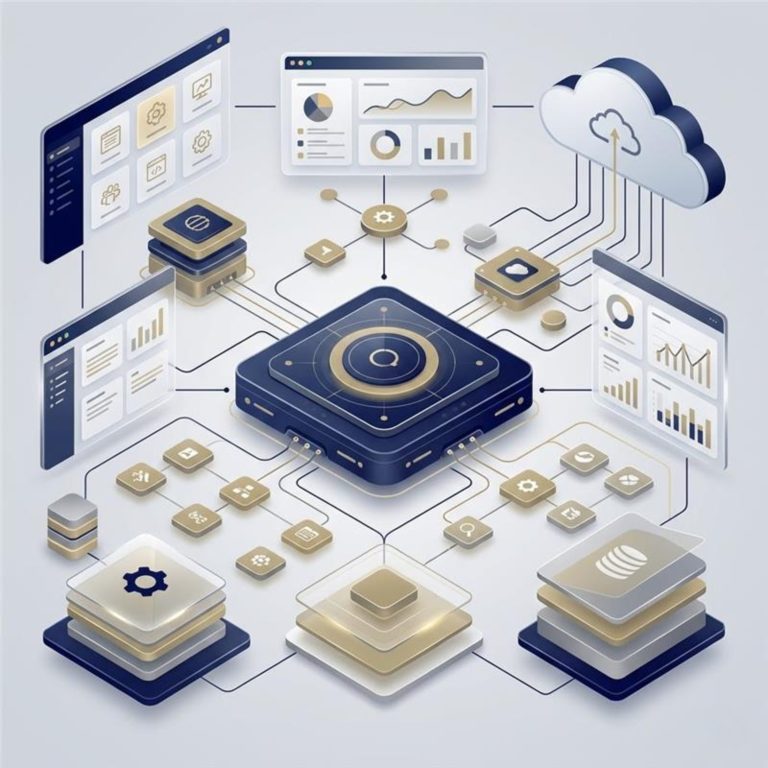



The crossroads of digital transformation is a familiar place for many business leaders. You are likely facing a familiar dilemma: your current ERP is aging, support is ending, or the system simply can’t keep up with the pace of modern commerce. At this juncture, many organizations fall into the “comfort trap”—choosing to perform a standard version upgrade of their existing legacy software because it feels safer and less disruptive.
However, in today’s economy, staying with a legacy architecture is no longer the “safe” bet; it is a strategic risk. Moving to Microsoft Dynamics 365 isn’t just a version update; it is a fundamental shift from a siloed record-keeping tool to an intelligent, AI-powered ecosystem.
As a leading Microsoft Gold Partner, GlobalITS has seen firsthand how businesses in the Middle East and beyond transition from the limitations of the past to the limitless potential of the Microsoft Cloud.
The Hidden Cost of “Just an Upgrade”
When you choose to upgrade a legacy on-premise system, you are essentially putting a new engine in a 20-year-old chassis. You might get a slightly faster interface, but you are still bound by the structural limitations of yesterday’s technology.
The Maintenance Debt of On-Premise Systems
Legacy upgrades require significant capital expenditure (CapEx) for hardware maintenance, server cooling, and physical security. Furthermore, every time you want to add a new feature, you face complex integration hurdles. Dynamics 365 shifts this to an OpEx model, where Microsoft handles the infrastructure, security, and updates, allowing your IT team to focus on innovation rather than server maintenance.
The Innovation Gap
Legacy systems were built for data entry. Modern ERPs like Dynamics 365 are built for data insights. If your ERP cannot natively process telemetry from IoT devices, automate workflows via low-code platforms, or provide real-time predictive analytics, you are operating with a blind spot that your competitors are likely exploiting.
Why Dynamics 365 is the Definitive Choice
Microsoft Dynamics 365 breaks the traditional ERP mold by unifying CRM and ERP capabilities into a single, cohesive cloud environment. It removes the walls between departments, ensuring that “one version of the truth” exists across your entire enterprise.
Seamless Integration with the Microsoft Ecosystem
One of the most compelling reasons to choose Dynamics 365 is its native synergy with the tools your team already uses. Whether it is exporting data to Excel for deep analysis, utilizing Teams for collaborative decision-making, or leveraging Microsoft Dynamics 365 documentation to manage customer interactions, the friction of switching between apps disappears.
Scalability and Elasticity
Legacy systems are rigid. If your business expands into a new territory or adds a new product line, a legacy upgrade often requires a complete re-configuration. Dynamics 365 is modular. You can start with Business Central or Finance & Operations and add modules for Sales, Field Service, or Marketing as your business matures.
The AI Revolution: Copilot and Predictive Insights
The most significant differentiator between a legacy upgrade and Dynamics 365 is the infusion of Artificial Intelligence. Microsoft has integrated Microsoft Copilot in Dynamics 365, an AI assistant, directly into the ERP workflow.
Proactive vs. Reactive Management
In a legacy system, you find out you have a supply chain bottleneck after it happens. With Dynamics 365, AI-driven insights analyze historical data and external signals to predict disruptions before they impact your bottom line. This shift from reactive to proactive management is what defines modern market leaders.
Automating Mundane Tasks
Dynamics 365 uses AI to automate repetitive tasks like invoice matching, payment collections, and even drafting email responses to customer inquiries. This frees your workforce to engage in high-value strategic thinking rather than data reconciliation.
Security in the Age of Cyber Threats
For many organizations, the perceived “security” of having a physical server in the building is a myth. Sophisticated cyberattacks target legacy infrastructure because it is often the hardest to patch and update.
Enterprise-Grade Security by Microsoft
By moving to Dynamics 365, your data is protected by Microsoft’s multibillion-dollar investment in cybersecurity. You benefit from multi-factor authentication (MFA), advanced encryption, and a global team of security experts monitoring threats 24/7. Learn more via the Microsoft Trust Center.
Maximizing ROI Through Digital Transformation
The ultimate goal of any ERP transition is to drive profitability. While a legacy upgrade might seem cheaper upfront, the long-term Return on Investment (ROI) of Dynamics 365 is significantly higher.
Reduced Total Cost of Ownership (TCO)
When you factor in the elimination of hardware refreshes, reduced IT labor costs, and the efficiency gains from automation, the Total Cost of Ownership (TCO) of Dynamics 365 becomes highly favorable.
Empowering the Workforce with Low-Code Tools
Dynamics 365 lives within the Microsoft Power Platform ecosystem. This allows your “citizen developers” to create custom Power Apps or automate workflows without needing a computer science degree.
Partner with GlobalITS for Your Journey
The decision to move away from a legacy system is a decision to future-proof your business. A legacy upgrade is a temporary fix; Dynamics 365 is a long-term strategy for growth, agility, and innovation.
At GlobalITS, we specialize in helping businesses navigate this transition. We don’t just “install” software; we partner with you to rethink your business processes, ensuring that your ERP implementation delivers maximum value from day one.
Ready to move beyond the limitations of legacy software?
Contact GlobalITS today to schedule a personalized demo or a comprehensive consultation. Let us show you how Dynamics 365 can transform your enterprise.