

Stock portfolio management software sits in a different world from the alternative investments and fund administration platforms covered elsewhere in this series — public equities trade daily, prices are continuous and transparent, and the operational challenges shift from illiquid valuation toward cost basis accuracy, tax efficiency, and giving advisors and investors a clear, honest read on risk and performance. That shift in focus means stock portfolio management software should be evaluated on a genuinely different set of criteria than a platform built for private markets, even though both fall under the broader investment management software umbrella.
This is a look at what actually matters when evaluating stock portfolio management software — risk monitoring, tax-loss harvesting, and the operational features that separate a platform built for genuine oversight from one built mainly to display a return number.
Risk Monitoring Needs to Be Continuous, Not Periodic
For a wealth advisor or asset manager running stock portfolios across many client accounts, the most valuable capability a portfolio management platform provides is firm-wide risk awareness — identifying drift, concentration, and exposure risk across every account continuously rather than surfacing it only during a scheduled quarterly review. A single overconcentrated position sitting quietly in dozens of client accounts is exactly the kind of risk that periodic review misses and continuous monitoring catches immediately. This matters as much for a single-advisor practice managing a few dozen accounts as it does for a firm running thousands, since concentration risk scales with account count regardless of firm size.
Model portfolios are the operational backbone that makes consistent risk management possible at scale: software that lets a firm define a strategy once and implement it consistently across every account ensures portfolio decisions reflect the firm’s actual investment approach rather than individual interpretation drifting account by account over time. Without model portfolio functionality, an advisory firm is effectively relying on every advisor independently applying the same judgment consistently — a reasonable expectation for a two-person shop, and an unreasonable one at any real scale. Model portfolios also make rebalancing dramatically more efficient operationally: a strategy update applied once at the model level can propagate to every linked account automatically, rather than requiring an advisor to manually replicate the same trade across dozens or hundreds of individual accounts one at a time.
Tax-Loss Harvesting: Genuinely Valuable, but Not a Free Lunch
Automated tax-loss harvesting is one of the most heavily marketed features in stock portfolio management software, and it’s worth understanding both what it can deliver and where the marketing outpaces the reality. Independent academic research puts realistic tax-loss harvesting alpha at roughly 1.08% annually under favorable conditions — monthly contributions, consistent capital gains to offset — a meaningfully more modest figure than some providers’ own marketing claims. Strip out those favorable assumptions and the estimated benefit drops considerably: without regular contributions, alpha falls to roughly 0.72%, and for an investor without ongoing contributions or capital gains to offset, realistic value can fall as low as 0.21% — a number that may not even cover a platform’s management fee.
The bigger issue with automated tax-loss harvesting isn’t the size of the benefit, but the gaps automation can’t close on its own. Software has no visibility into an individual investor’s actual tax situation — an investor in the 0% capital gains bracket can lose value from harvesting a loss if it pushes other income into a higher bracket, and the software has no way to know that. The wash sale rule, which disallows a loss deduction when a substantially identical security is purchased within 30 days before or after the sale, applies across every account an investor holds, including retirement accounts and a spouse’s holdings — a scope automated systems frequently fail to monitor completely. This isn’t a hypothetical risk: one major robo-advisor was fined $250,000 by the SEC after wash sale violations occurred in roughly a third of client accounts over a multi-year period. A platform offering tax-loss harvesting is a genuine value-add, but it needs human oversight layered on top, not blind trust that the automation has it fully covered.
Cost Basis and Performance Accuracy Are the Unglamorous Foundation
Underneath risk monitoring and tax features, stock portfolio management software depends on accurate cost basis tracking and dividend reinvestment accounting — unglamorous functionality that determines whether every downstream number, from realized gains to total return, is actually correct. A platform that gets cost basis wrong on even a small percentage of positions produces compounding errors across performance reporting, tax documents, and client statements, and these errors are notoriously difficult to catch after the fact without a clean, auditable transaction history. Evaluating this layer isn’t glamorous, but it’s the foundation everything else in the platform depends on.
A related and equally unglamorous requirement is corporate action handling — stock splits, spin-offs, mergers, and special dividends all require the platform to correctly adjust cost basis and share counts without manual intervention every time one occurs. A firm managing even a modest number of client accounts will encounter corporate actions regularly, and a platform that mishandles them silently produces incorrect cost basis figures that can persist undetected for months before surfacing in a client’s tax documents — at which point the fix involves reconstructing historical records rather than a simple correction.
Integration Depth Determines How Much Manual Work Remains
Stock portfolio management software rarely operates as a standalone tool — it needs to pull holdings and transaction data from brokerages and custodians, feed performance and tax data into CRM and financial planning tools, and in many firms, connect to a separate client portal or mobile app entirely. The depth of that integration is what determines how much manual reconciliation work remains after the software is implemented. A platform with genuine API-level integration to a firm’s actual custodians updates holdings automatically as trades settle; a platform relying on periodic manual file uploads or loosely connected exports leaves staff doing exactly the kind of reconciliation work the software was supposed to eliminate. This is worth testing directly against a firm’s specific custodian relationships during evaluation, rather than accepting a vendor’s general claim of “broad integration coverage” at face value.
Mobile and client-facing access has also shifted from a nice-to-have to a baseline expectation. Clients increasingly expect to check portfolio performance, recent transactions, and document access from a phone rather than waiting for a scheduled advisor call or a mailed statement, and a platform that treats mobile access as an afterthought creates a service gap that’s increasingly visible to clients used to that level of access from their banking apps.
The Category’s Growth Reflects Rising Digital Expectations
The market for stock portfolio management software continues expanding steadily as both institutional advisors and individual investors demand more continuous, digital-first portfolio oversight: the global market is projected to grow at roughly an 8.5% compound annual growth rate from 2026 through 2033, with the Middle East among the fastest-growing regions globally at an estimated 9.23% CAGR — outpacing North America’s growth rate even though North America remains the largest market by absolute size. That regional growth reflects a broader shift already underway in GCC wealth and asset management: firms moving away from spreadsheet-based tracking and periodic manual reporting toward platforms built for continuous oversight.
Supervisory Oversight Matters as Much as Individual Account Management
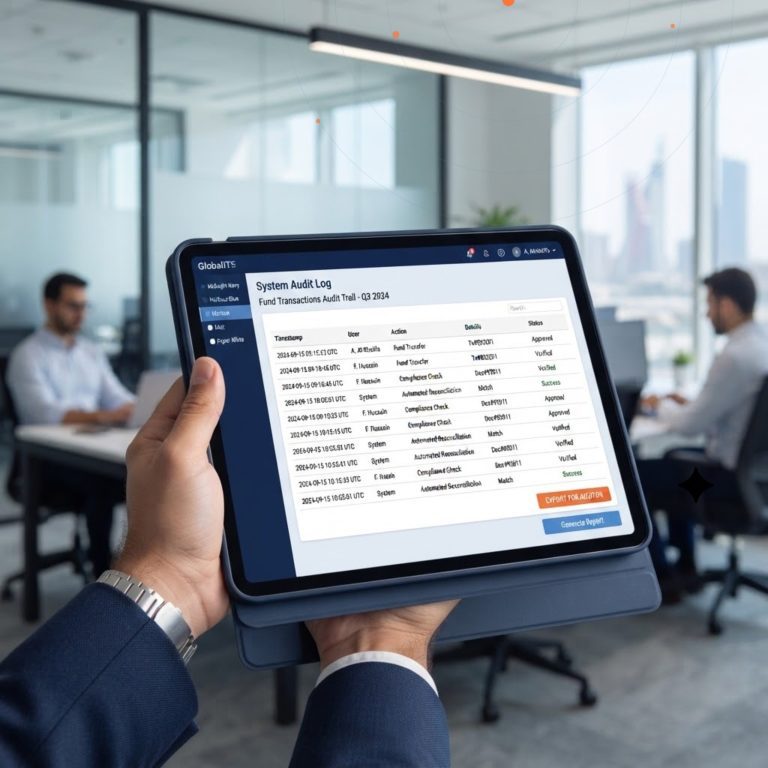
For advisory firms managing stock portfolios at any scale, software needs to support supervisory oversight, not just individual account management — giving firm leadership continuous visibility into how portfolios are actually being managed across every advisor, with a documented, audit-ready trail explaining why each portfolio decision was made. This connects research, portfolio construction, client communication, and documentation into one workflow rather than leaving each function in a separate tool that requires manual reconciliation to piece together a complete picture. For a compliance review or a regulatory inquiry, having that trail already documented inside the platform is far more defensible than reconstructing it after the fact from emails and spreadsheets.
Evaluating Stock Portfolio Management Software for a GCC-Based Firm
For wealth advisors and asset managers in Bahrain and the wider GCC, confirm a platform’s tax-related features are genuinely relevant to the jurisdictions clients are actually taxed in — a tax-loss harvesting feature built entirely around US tax rules provides little value to a GCC-based advisor serving clients under different tax regimes, and it’s worth asking directly what a platform’s tax functionality actually covers outside the US market before treating it as a meaningful differentiator. Continuous risk monitoring and supervisory oversight, by contrast, are valuable regardless of jurisdiction and should weigh heavily in any regional evaluation.
Building Oversight That Actually Holds Up
Global ITS helps wealth advisors and asset managers across Bahrain and the GCC implement stock portfolio management software built around genuine continuous risk monitoring and audit-ready oversight, not just a polished return dashboard. Contact our team to talk through what your firm actually needs, or request a live demo to see it in practice.